Spotlight News
-
21 April 2024 at 10 : 04 AM
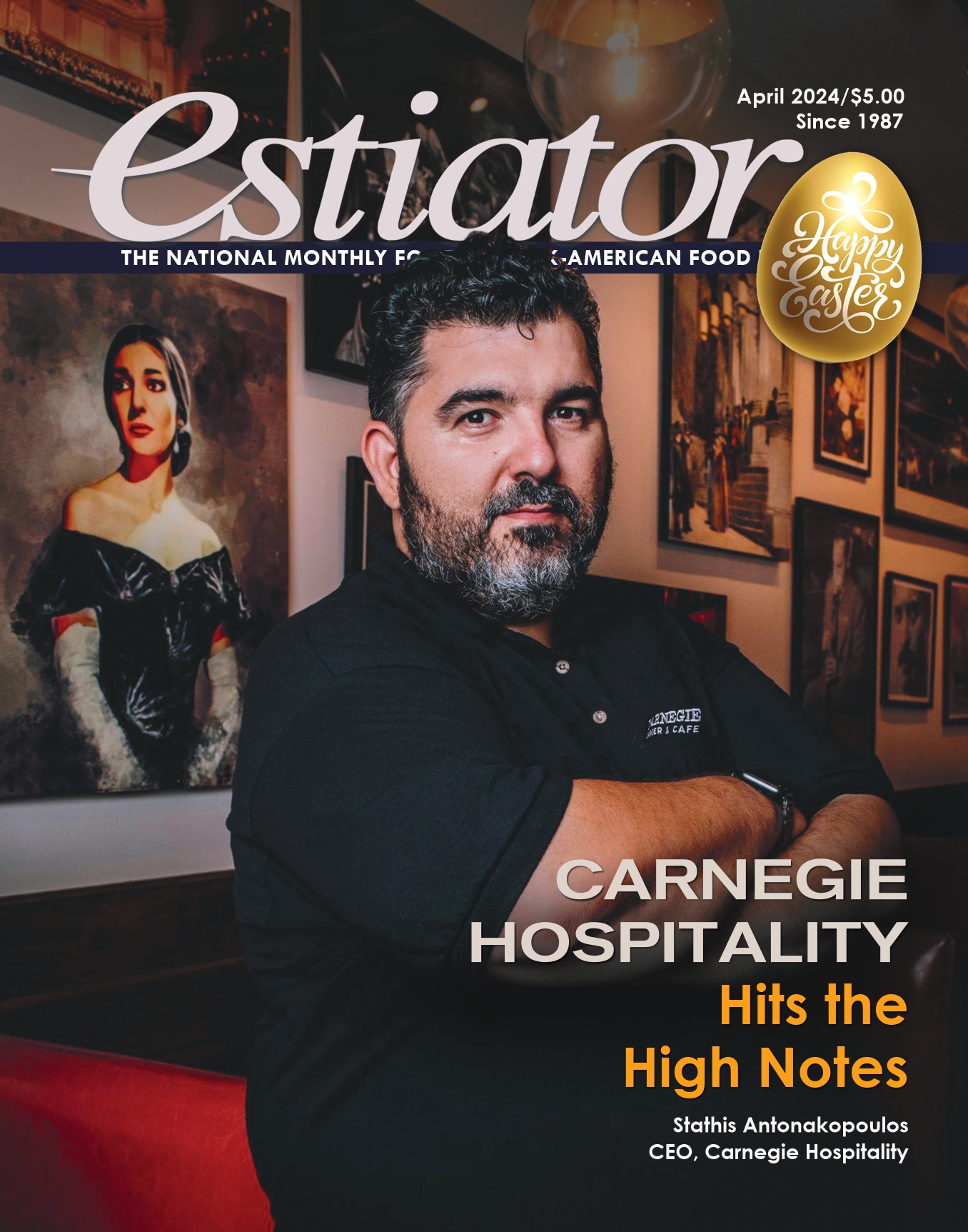
Hitting the High Notes

COVER STORY With NYC’s Carnegie Hospitality, Stathis Antonakopoulos creates a hit. By Michael Kaminer Stathis Antonakopoulos Even as an 11-year-old busboy in his grandfather’s seaside restaurant in the village of Likoporia, Stathis Antonakopoulos knew hospitality would be his future. “I worked there until I was 18, and I realized ...
Read More -
21 April 2024 at 10 : 56 AM
Η Ιστορία του Λουμίδη

ΠΡΟΙΟΝΤΑ ΕΠΙΜΕΛΕΙΑ ΤΖΙΝΑΣ ΚΑΛΛΙΤΣΗ Ένα από τα σημαντικότερα κεφάλαια στην ιστορία του ελληνικούκαφέ έχει την υπογραφή ΛΟΥΜΙΔΗΣ ΠΑΠΑΓΑΛΟΣ. Το 1919 άνοιξε στον Πειραιά το πρώτο κατάστημα ...
Read More -
21 April 2024 at 10 : 49 AM
Kooc Taverna Secret
Πλατεία Αγοράς, Costa Navarino, Πύλος | (+30) 2723097165 www.costanavarino.com Το εστιατόριο Kooc Taverna Secrets του ξενοδοχειακού συγκροτήματος της Costa Navarino, αποτελεί την καλύτερη γκουρμέ κουζίνα στη Μεσσηνία. Υπεύθυνος ...
Read More -
12 March 2024 at 13 : 36 PM
Does Around-the-Clock Still Rock?

COVER STORY Betting big on 24-hour dining at a tough time for late-night. By Michael Kaminer Stratis Morfogen, the New York author and entrepreneur, has made a career of breaking rules. He even titled his 2022 book "Be a Disruptor: Street-wise Lessons for Entrepreneurs." But Morfogen’s latest venture might be his most audacious. ...
Read More -
12 March 2024 at 13 : 28 PM
Η Ιστορία του Καφέ

ΠΡΟΪΟΝΤΑ ΤΗΣ ΤΖΙΝΑΣ ΚΑΛΛΙΤΣΗ ────────────Η ιστορία του καφέ ξεκίνησε στην Αιθιοπία, όπου η καφέα η αραβική (Coffea arabica) μεγάλωνε ως θάμνος. Αρχικά ο καρπός χρησιμοποιείτο αυτούσιος από ...
Read More -
24 February 2024 at 07 : 07 AM
Vlore POS+

THE SMART SOLUTION FOR FULL-SERVICE RESTAURANTS HOW VLORE POS+ STARTED Vlore POS+ began when a group of experienced restaurant owners who, struggling with the challenges of traditional payment processing systems, recognized the need for a better solution."In the restaurant business, we are always being charged extra fees and getting stuck ...
Read More -
10 February 2024 at 06 : 34 AM
Tapping Nostalgia, Striking Gold

COVER STORY Stamford’s Peter Valis scores another Hit with The Americano. By Michael Kaminer Once you’ve opened a hugely popular Greek restaurant and a smash-hit Italian spot, what’s your next act? If you’re Peter Valis, the Connecticut nightlife impresario turned restaurateur, you go back to the future. Valis, ...
Read More -
10 February 2024 at 06 : 12 AM
Η Μαριγούλα
Κωνσταντινουπόλεως 7, Πολύγυρος, Χαλκιδική | (+30) 2371 023171 www.marigoula.gr Οινομαγειρείο «ΜΑΡΙΓΟΥΛΑ» Της Τζίνας Καλλίτση Το Οινομαγειρείο «Μαριγούλα» του Σοφοκλή Γιατζόγλου, βρίσκεται στο ...
Read More -
10 February 2024 at 06 : 05 AM
Η Ιστορία της Πατάτας
Προϊόντα Της Τζίνας Καλλίτση Η καλλιέργεια της πατάτας ξεκίνησε πριν από 8.000 χρόνια στα υψίπεδα των Άνδεων και συγκεκριμένα στην περιοχή Πούνο, στα σύνορα Βολιβίας – Περού. Στο τεράστιο ...
Read More -
18 January 2024 at 06 : 11 AM
A Specialty Food Legend’s 50-Year Odyssey

COVER STORY Grecian Delight / Kronos is just getting started. By Constantine N. Kolitsas It’s not often that a company that’s been around for five decades has the same energy, drive, and ambition as start-up, but that’s exactly what you find when you sit-down with Peter Parthenis, Jr., the CEO and president of Grecian ...
Read More -
18 January 2024 at 06 : 52 AM
Aut Viam Inveniam Aut Faciam

MANAGING FOR SUCCESS By CONSTANTINE N. KOLITSAS Business Coach Don’t stress it; I can’t pronounce it, either. It’s Latin. The phrase translates to “I will find away or make one.” It was uttered by the ancient Carthaginian general Hannibal in response to his generals when told it would be impossible to cross the Alps on war elephants in ...
Read More -
18 January 2024 at 06 : 45 AM
Pan Gregorian of New England (PGNE)

From the left: Demetris Papanikolaou, Nikos Vlastaris, George Pertesis, Peter Kokenos, Hrysoula Trimpalis, George Mastromanolis, James Tzepos, Chris Skabardonis, Dimitri Magriplis, Nicholas Vlamis, Nikos Roussas, Themi Kolitsas. George Siamboulis and James Tzepos. ADDRESS 1 Park Ave, New Haven, CT ...
Read More -
18 January 2024 at 06 : 36 AM
Εστιατόριο Anama

Anama: Πελοπόννησος - Ν. Μεσσηνίας - Γιάλοβα | (+30) 6982257869 www.anamarestaurant.gr ΤΗΣ ΤΖΙΝΑΣ ΚΑΛΛΙΤΣΗ Το Anama Restaurant άνοιξε τις πόρτες του τον Ιούλιο του 2021στο παλιό οινοποιείο του Συνεταιρισμού ...
Read More
Γεγονότα
-
21 April 2024 at 10 : 31 AM
Γεγονότα-Ειδήσεις ΑΠΡΙΛΙΟΣ 2024

Το ετήσιο Συνέδριο της Ηγεσίας των 100 His Eminence Archbishop Elpidophoros of America, (Left) and Demetrios G. Logothetis and Pau-lette Poulos (Far Right) present the Archbishop Iakovos Leadership 100 Award for Excellence to (Lto R) to Dr. Theodoros Teknos, Dr. Leonidas Platanias, Matina Kolokotronis, and General Andrew ...
Read More -
12 March 2024 at 13 : 32 PM
Γεγονότα-Ειδήσεις ΜΑΡΤΙΟΣ 2024
NIKI SIDERIS 29TH ANNUAL WALK & SPRING FESTIVAL RONALD MCDONALD HOUSE NY, GREEK DIVISION ΤΟ ΕΛΛΗΝΙΚΟ ΤΜΗΜΑ του Ronald McDonald House New York, ιδρύθηκε από τη Νίκη Σίδερη και με σημερινή Διευθύντρια την Σπυριδούλα Κατέχη, βοηθά στην ...
Read More -
10 February 2024 at 06 : 27 AM
Γεγονότα-Ειδήσεις ΦΕΒΡΟΥΑΡΙΟΣ 2024
Ο ΥΙΟΣ ΚΑΤΣΙΜΑΤΙΔΗΣ ΠΡΟΕΔΡΟΣ ΤΟΥ ΟΜΙΛΟΥ RED APPLE Ο ΠΟΛΥΕΚΑΤΟΜΜΥΡΙΟΥΧΟΣ επιχειρηματίας, John Catsimatidis προώθησε τον 30χρονο γιο του, John Catsimatidis Jr., σε πρόεδρο και διευθύνοντα σύμβουλο του Ομίλου Red Apple. Ο ...
Read More -
18 January 2024 at 06 : 32 AM
Γεγονότα-Ειδήσεις ΙΑΝΟΥΑΡΙΟΣ 2024
Έκλεισε το εστιατόριο «The Gyro Spot» Έκλεισε τις πύλες του το ελληνικό εστιατόριο «The Gyro Spot» στο Στόουνχαμ της Μασαχουσέτης. Το «Gyro Spot» ήταν το τρίτο κατάστημα της ομώνυμης αλυσίδας. Tα άλλα δύο ...
Read More -
22 December 2023 at 11 : 48 AM
Γεγονότα-Ειδήσεις ΔΕΚΕΜΒΡΙΟΣ 2023
Cosmos FM: ΤΙΜΗΣΕ ΤΗΝ Paulette Poulos Η ΠΟΛΕΤ ΠΟΥΛΟΥ, αφιέρωσε όλη της την ζωή στην υπηρεσία της Ιεράς Αρχιεπισκοπής, ως διευθύντριας του γραφείου του Αρχιεπισκόπου Βορείου και Νοτίου Αμερικής, ...
Read More -
11 November 2023 at 15 : 29 PM
Γεγονότα-Ειδήσεις ΝΟΕΜΒΡΙΟΣ 2023
ΤΡΙΤΟ ΚΑΤΑΣΤΗΜΑ ΕΣΤΙΑΣΗΣ ΑΠΟ ΤΟΝ ΠΗΤΕΡ ΚΑΜΠΙΤΣΗ ΤΡΙΤΟ κατά σειρά κατάστημα εστίασης, στην Αστόρια και το Λονγκ Άϊλαντ, δημιούργησε ο ομογενής επιχειρηματίας Πίτερ Καμπίτσης. Πρόκειται για ...
Read More -
10 October 2023 at 06 : 40 AM
Γεγονότα-Ειδήσεις ΟΚΤΩΒΡΙΟΣ 2023
ΕΦΥΓΕ Ο ΝΙΚΟΣ ΑΝΔΡΙΩΤΗΣ Ο ΟΜΟΓΕΝΗΣ, Νίκος Ανδριώτης, 82 ετών, έφυγε πρόσφατα από την ζωή στο νοσοκομείο Mount Sinai Queens. Ο εκλιπών, γεννήθηκε στο χωριό Νικιά της Νισύρου τον Νοέμβριο του 1940 και το ...
Read More